


Secure your code, dependencies and web apps
Qalea connects to your repositories and scans your code, open source dependencies, container images and live web applications. Each finding shows where it is and how severe it is.
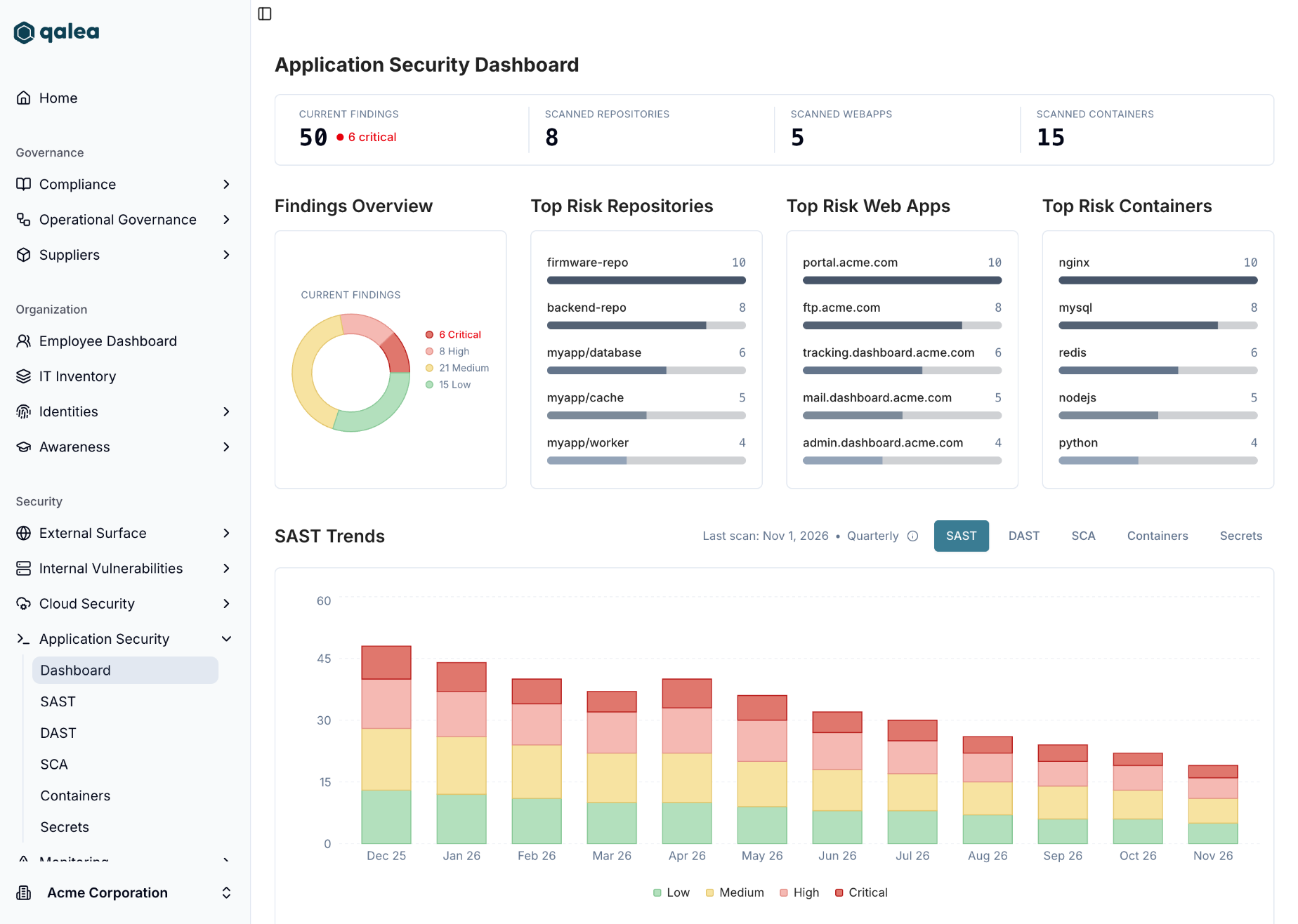
What application security covers
Application security testing finds vulnerabilities in the software a company builds: the code its developers write, the open source libraries they use, the containers it ships and the web applications it runs. Qalea scans all four and shows each finding with where it is and how severe it is.
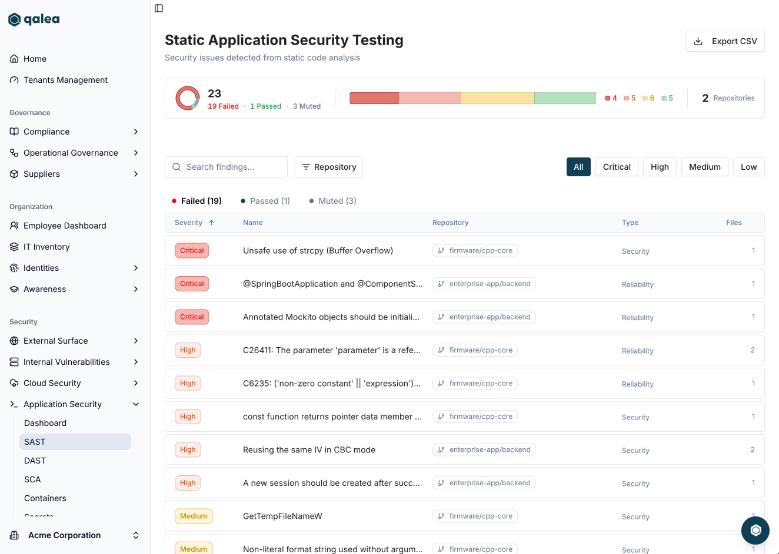
SAST
Security issues in source code, with the repository and file affected.
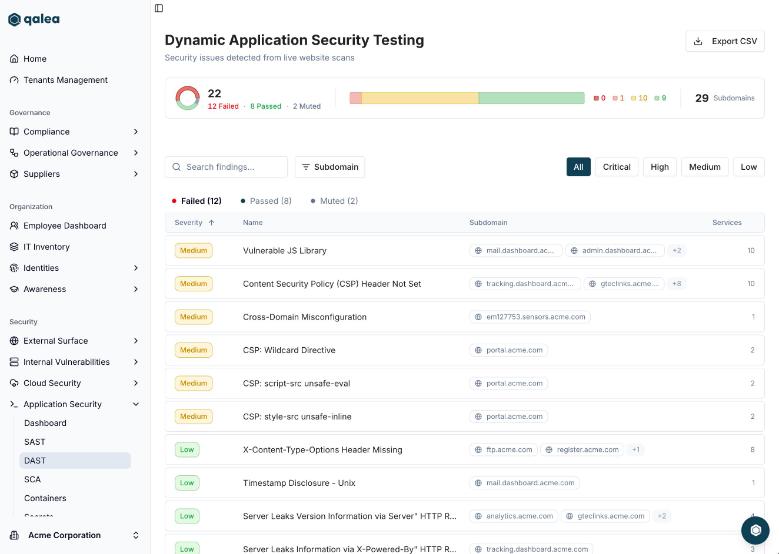
DAST
Vulnerabilities in live web applications, by subdomain.
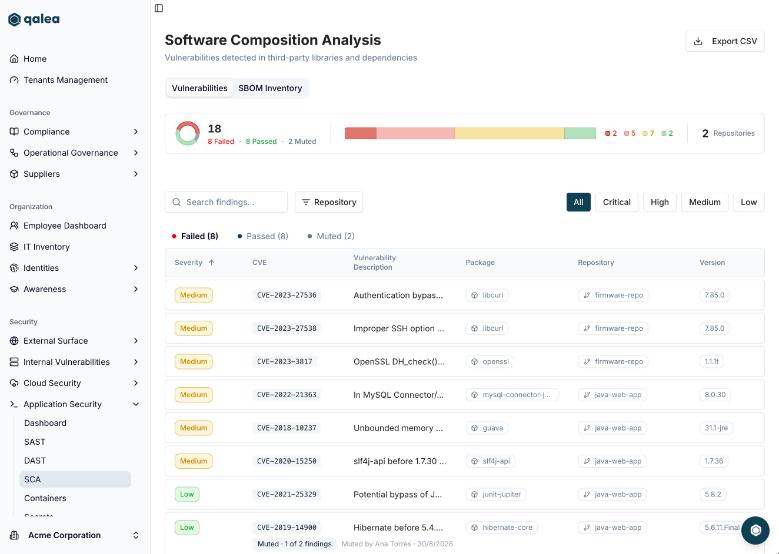
SCA and SBOM
Open source dependencies with known vulnerabilities, and an inventory with versions and licenses.
Containers
Vulnerabilities in container images, by container and package.
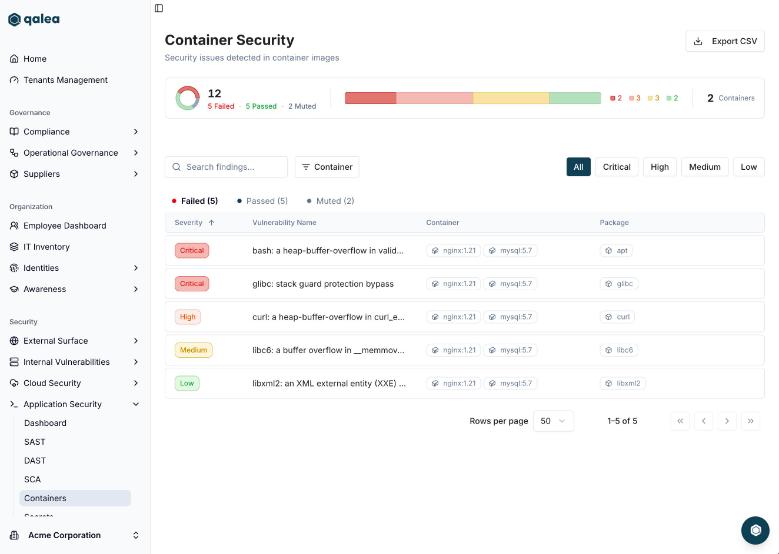
Where vulnerabilities come from
Open source libraries
Most of the code in a modern application comes from dependencies. SCA checks each one against published vulnerabilities, and the SBOM shows quickly whether a new one affects you.
Secrets committed to repositories
A key in a repository stays in its history even after the line is deleted. Secrets detection shows the file and line, so the key can be rotated.
What is actually deployed
DAST tests the running application from outside and finds missing security headers, exposed endpoints and outdated libraries that code scans cannot see.
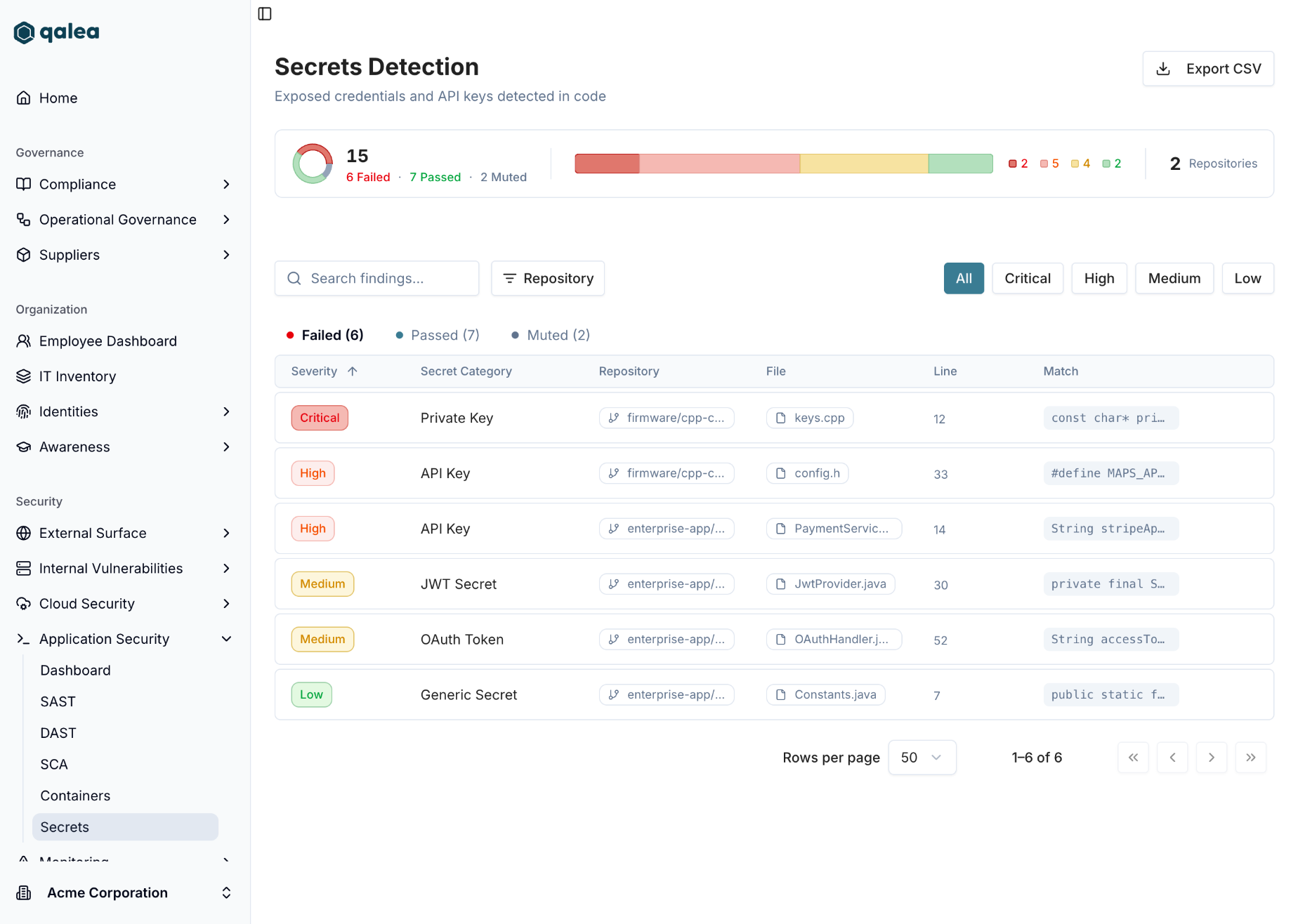
Exposed secrets, found by file and line
Secrets. API keys, tokens and credentials exposed in repositories, with the file and line.
Export. Export the findings as CSV for your developers or your auditor.
Evidence for your frameworks
Secure development and vulnerability management are controls in ISO 27001, ENS, SOC 2 and NIS2. The findings are linked to those controls in the platform.

ISO 27001

ENS

SOC 2

NIS2
Application security questions, answered